
The data is no longer ambiguous. Across every measurable dimension -- job postings, developer surveys, academic programs, enterprise adoption, and cloud platform investment -- Python has overtaken SAS as the dominant language for analytics and data science. This is not a prediction about the future. It is a description of the present. And for organizations still running critical workloads on SAS, understanding the depth and permanence of this shift is essential to making informed technology decisions.
The Job Market Has Spoken
Labor market data provides the clearest signal of where industry is heading, because hiring decisions reflect real investment commitments rather than survey opinions.
Analysis of major job posting platforms reveals a stark divergence. In 2025, Python appears as a required or preferred skill in approximately 78% of data analyst and data scientist job postings in the United States. SAS appears in roughly 18%, down from 35% five years ago. More telling is the trend line: Python-required postings have grown 12% year-over-year since 2020, while SAS-required postings have declined 8% annually over the same period.
The salary data reinforces this pattern. Professionals with Python expertise command median salaries 15% to 22% higher than those with equivalent SAS-only experience, depending on the role and geography. This premium reflects both higher demand and the broader applicability of Python skills across machine learning, data engineering, web development, and automation.
Key Job Market Statistics (2025)
- Python listed in 78% of data science job postings vs. 18% for SAS
- SAS-only postings declining at 8% per year since 2020
- Python professionals command 15-22% salary premium over SAS-only equivalents
- "SAS to Python migration" appears in 3x more job descriptions than in 2022
- Entry-level analytics roles requiring SAS have dropped below 10%

SAS to Python migration — automated end-to-end by MigryX
Stack Overflow and Developer Community Trends
The annual Stack Overflow Developer Survey has tracked this shift in real time. Python has been the most-wanted programming language for six consecutive years. SAS does not appear in the top 25 of any category -- most wanted, most loved, or most used -- among the survey's respondent base.
Stack Overflow question volume tells a similar story. Monthly new questions tagged with "python" and "pandas" outnumber those tagged "sas" by a factor of 40 to 1. This matters because question volume is a proxy for active learning: people ask questions when they are building things. The SAS question volume has been flat since 2018, while the Python data science ecosystem (pandas, scikit-learn, PySpark) grows steadily.
GitHub repository data completes the picture. The number of public repositories containing SAS code has plateaued at approximately 12,000. Python data science repositories number in the hundreds of thousands and growing. The open-source ecosystem -- where new statistical methods, ML algorithms, and data processing tools appear first -- is overwhelmingly Python-native.
MigryX: Purpose-Built for Enterprise SAS Migration
MigryX was designed from the ground up for enterprise SAS migration. Its SAS parser understands every construct — DATA steps, PROC SQL, PROC SORT, PROC MEANS, PROC FREQ, PROC TRANSPOSE, macros, formats, informats, hash objects, arrays, ODS output, and even SAS/STAT procedures like PROC REG and PROC LOGISTIC. This is not a generic code translator — it is the most comprehensive SAS migration platform in the industry.
Academic Curriculum Changes
Universities are leading indicators of workforce skills five to ten years into the future. And universities have moved decisively to Python.
A survey of the top 50 US graduate programs in statistics and data science shows that 94% now teach Python as the primary programming language. Only 22% still include SAS instruction, typically as an elective or a secondary tool. This is a complete reversal from 2010, when SAS was the dominant language in 80% of statistics programs.
The implications are profound. Students graduating today have deep Python fluency and little or no SAS exposure. Organizations that require SAS skills are recruiting from an increasingly small and aging talent pool. Every year that passes makes the talent gap wider and the recruitment challenge steeper.
Business schools have followed the same trajectory. MBA programs that once taught SAS for business analytics have switched to Python and R. The Wharton School, MIT Sloan, and Harvard Business School all use Python as their primary analytics language. When these graduates enter the workforce, they expect -- and demand -- modern tooling.
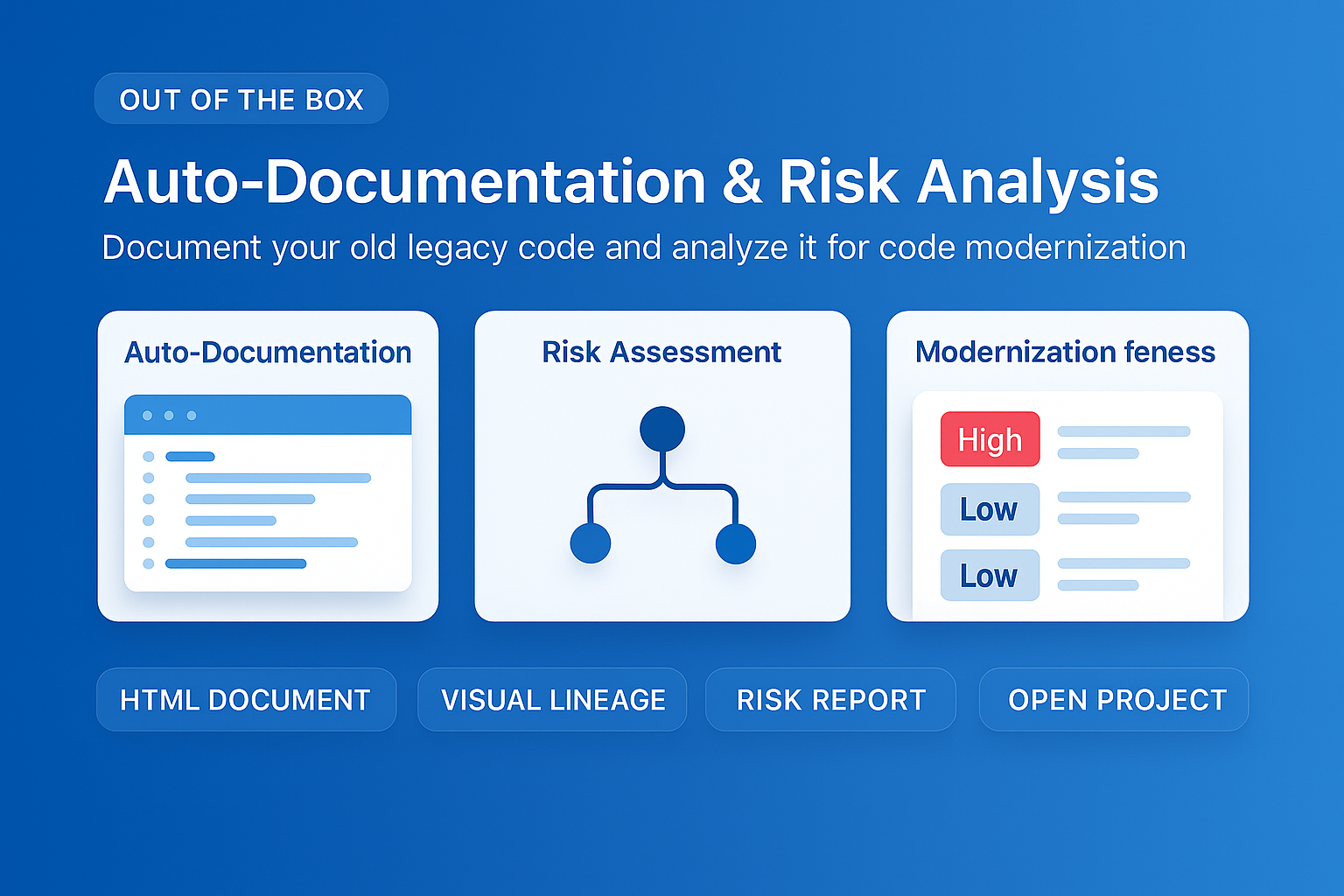
MigryX auto-documentation captures every transformation decision, creating audit-ready migration records automatically
How MigryX Handles the Hard Parts of SAS Migration
Every SAS shop has code that makes migration teams nervous — deeply nested macros that generate dynamic code, DATA step merge logic with complex BY-group processing, hash object lookups, RETAIN statements that carry state across rows, and PROC IML matrix operations. These are exactly the constructs where MigryX excels. Its combination of deterministic AST parsing and Merlin AI means even the most complex SAS patterns are converted accurately.
Enterprise Adoption: The Tipping Point
For years, enterprise adoption of Python for production analytics lagged behind its popularity in research and education. That gap has closed. Several factors drove the change:
Cloud Platform Integration
Every major cloud platform has made Python a first-class citizen. AWS SageMaker, Azure Machine Learning, Google Cloud Vertex AI, Databricks, and Snowflake all provide native Python interfaces, managed Python runtimes, and optimized Python libraries. SAS integration with these platforms exists but is secondary, often requiring additional middleware and licensing.
This matters because enterprises are moving to the cloud, and the path of least resistance is the language that cloud platforms are designed around. When Databricks offers a fully managed PySpark environment with one-click cluster scaling, and SAS requires a separate SAS Viya deployment with its own infrastructure, the operational simplicity of Python-native becomes a decisive factor.
The Machine Learning Imperative
The explosion of machine learning in enterprise applications has been Python's greatest accelerator. TensorFlow, PyTorch, scikit-learn, XGBoost, Hugging Face -- the entire ML stack is Python-native. Organizations that want to move beyond traditional statistical models to deep learning, natural language processing, or computer vision have no practical choice but Python.
SAS has added ML capabilities through SAS Viya, but the ecosystem is orders of magnitude smaller. When a new research paper publishes a state-of-the-art algorithm, the reference implementation appears on GitHub in Python within days. A SAS implementation may follow months later, if at all. This velocity gap means SAS users are perpetually behind the cutting edge.
DataOps and Integration
Modern data workflows require tight integration between data ingestion, transformation, analysis, model training, deployment, and monitoring. Python connects naturally to every component: REST APIs, message queues, container orchestration, CI/CD pipelines, and monitoring systems. SAS was designed as a self-contained environment, and its integration with external systems, while improved, remains more complex.
The question is no longer whether to migrate from SAS to Python. The question is when, and how to do it without disrupting the business operations that depend on the analytics those SAS programs produce.
What This Means for Organizations Still on SAS
If your organization runs significant workloads on SAS, this analysis should not trigger panic, but it should trigger planning. Here is what the trend data means in practical terms:
Rising Costs, Shrinking Returns
SAS licensing costs remain high -- typically $50,000 to $500,000 or more per year depending on the products and deployment scale. Meanwhile, the value equation is shifting. You are paying premium prices for a platform that a shrinking pool of talent knows how to use, that integrates less naturally with modern cloud infrastructure, and that lacks the ML/AI capabilities that competitors are leveraging.
Talent Risk is Real and Growing
Your most experienced SAS developers are likely in their 40s and 50s. They are not being replaced by graduates with equivalent skills. Every retirement, every departure, erodes institutional knowledge that cannot be easily recovered. The talent risk is not theoretical -- it is actuarial. You can model it based on your team's age distribution and industry attrition rates.
Technical Debt Compounds
Every new SAS program written today adds to the migration burden of tomorrow. Every integration built around SAS's data formats and interfaces becomes a constraint. Organizations that continue investing in SAS are not standing still -- they are actively increasing the cost and complexity of their eventual migration.
The Strategic Response
Forward-looking organizations are responding with a three-phase strategy:
- Freeze and inventory. Stop net-new SAS development. Build all new analytics in Python. Simultaneously, inventory the existing SAS estate to understand its scope, dependencies, and business criticality.
- Migrate in priority order. Convert the highest-value, highest-risk SAS programs first -- the ones that would cause the most damage if a key developer left. Use automated migration tools to accelerate the process and reduce cost.
- Upskill and transform. Retrain SAS developers in Python. Their domain knowledge is invaluable; they just need a new implementation language. Pair them with Python-native developers for knowledge transfer in both directions.
The window for orderly migration is open now. The tools are mature. The target platforms are proven. The talent to support the transition is available. Organizations that act now will complete their migration on their own timeline and terms. Those that wait will be forced to migrate under pressure -- when a critical developer retires, when SAS raises prices, or when a cloud mandate leaves no alternative. The data is clear. The time to act is now.
Why Every SAS Migration Needs MigryX
The challenges described throughout this article are exactly what MigryX was built to solve. Here is how MigryX transforms this process:
- Complete SAS coverage: MigryX handles every SAS construct — DATA steps, PROC SQL, macros, formats, hash objects, arrays, ODS, and 20+ PROCs.
- 4-8x faster than manual: What takes consulting teams months of manual conversion, MigryX accomplishes in weeks with higher accuracy.
- 60-85% cost reduction: Enterprises report dramatic cost savings compared to manual migration approaches.
- Production-ready output: MigryX generates clean, idiomatic Python, PySpark, Snowpark, or SQL — not rough drafts that need extensive rework.
MigryX combines precision AST parsing with Merlin AI to deliver 99% accurate, production-ready migration — turning what used to be a multi-year manual effort into a streamlined, validated process. See it in action.
Ready to modernize your legacy code?
See how MigryX automates migration with precision, speed, and trust.
Schedule a Demo